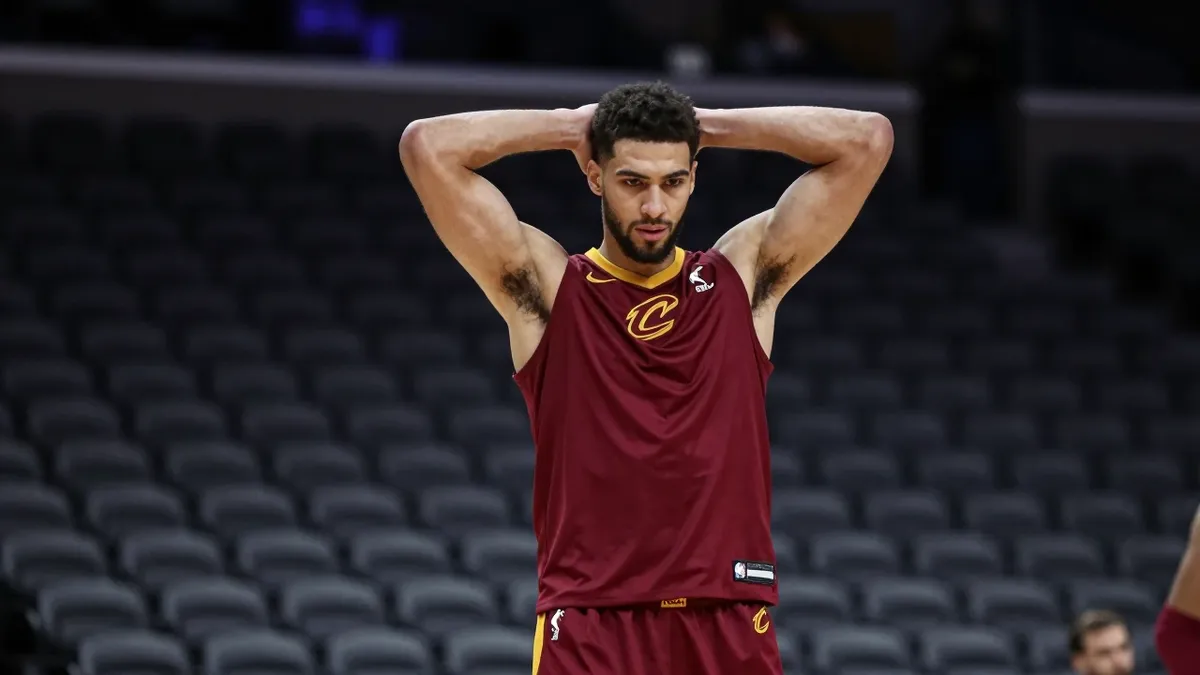
The Cleveland Cavaliers have locked in their star backcourt and made a significant trade, aiming to build on a 2025-26 season that ended with a tough playoff loss. The front office responded by securing Donovan Mitchell and James Harden to long-term deals and acquiring young wing Peyton Watson in a sign-and-trade.
What were the Cavaliers' key offseason moves?
The Cavaliers' summer was defined by securing their core and adding a specific piece. They signed Donovan Mitchell to a massive four-year, $273 million contract extension. James Harden also got a new three-year deal worth $97 million. The major transaction was a sign-and-trade with the Denver Nuggets for 23-year-old forward Peyton Watson, who signed a four-year, $88 million contract.
To make the Watson deal work, Cleveland moved several rotation players. They traded away veteran guard Max Strus and also lost forwards Dean Wade and Larry Nance Jr., along with guards Dennis Schroder and Keon Ellis. The team added veteran shooter Mario Hezonja as a depth piece. You can see the updated roster on our roster page.
Why does the Peyton Watson trade matter?
Watson is the central piece of Cleveland's retooling effort. The team hopes he can be the answer to their long-standing search for a reliable fifth starter next to Mitchell, Harden, Evan Mobley, and Jarrett Allen. He's coming off a career year where he averaged personal bests in points, rebounds, assists, and steals while shooting 41% from three-point range.
More importantly, Watson has developed into one of the league's stronger wing defenders. ESPN's Zach Kram gave the Cavaliers' offseason a 'B' grade, noting that trading depth for Watson was a risky but necessary move for a win-now team. Kram pointed out that the young wing's athletic 3-and-D potential significantly raises Cleveland's championship ceiling.
What is the outlook for the 2026-27 season?
The pressure is on for this group to take the final step. After first-round exits in 2023 and second-round losses in 2024 and 2025, they reached the Eastern Conference Finals last season only to be swept. The core, now all under contract, has no more excuses. The big question is whether Watson can provide the perimeter defense and shooting needed to complement the stars.
There are financial considerations, too. ESPN's Ben Golliver noted that Mitchell's new contract, which will pay him over $60 million in the 2027-28 season, deserves scrutiny. Mitchell, 29, is in his prime after an All-NBA Second Team season, but the deal runs through his age-34 season. Managing that cap sheet while contending will be a challenge. Fans can track their progress in the standings as the new season begins.
Can this roster win a championship?
The Cavaliers are clearly all-in. Re-signing Harden, while possibly not aging well, helped them avoid the restrictive second apron and keep financial flexibility. The gamble on Watson is a direct attempt to fix a porous perimeter defense that was exploited in the playoffs. His ability to guard multiple positions and hit open threes is exactly what the doctor ordered.
Mitchell is the engine. He finished seventh in MVP voting last year and finally reached the conference finals in his ninth NBA season. His partnership with Harden creates one of the most potent offensive backcourts in the league. The success of the season likely hinges on Watson's integration and the health of the core four. If it clicks, Cleveland has a real shot. If not, the tough questions will start much earlier than next offseason.